
-1.png?width=1320&name=svgviewer-png-output%20(2)-1.png)






Why rest is making your tendon pain worse (and what to do instead)
Dance physiotherapy can help you manage pain, reduce injury risk and stay involved in classes, rehearsals and performances where it is safe to do so. Dance places unique demands on the body. Whether you dance recreationally, competitively or professionally, the combination of strength, flexibility, mobility and repetitive movement can sometimes lead to pain or injury.
Research suggests that more than half of dancers experience pain, and for some, a dance injury can mean missing classes, rehearsals or performances.Many dancers believe that dancing through pain is simply part of the art form. However, continuing to dance through an injury without appropriately managing it can make symptoms worse or slow your recovery.
Dance physiotherapy can help you understand what may be contributing to your pain, manage an existing injury and find ways to keep dancing where appropriate.
Written in consultation with Geneva Winters, Physiotherapist at Habit Health West Wave
What is dance medicine?
Dance medicine focuses on the health, wellbeing and physical demands of dancers. It considers movements that are specific to dance and the injuries that can develop as a result of these demands.
Dance requires a unique combination of strength, flexibility, mobility, balance, coordination and control. Different styles of dance also place different demands on the body, which is why understanding the movements involved can be important when assessing a dancer's injury.
In my experience treating dancers, many are hesitant to see a healthcare provider because they are worried they will simply be told to stop dancing. That isn't necessarily the case.
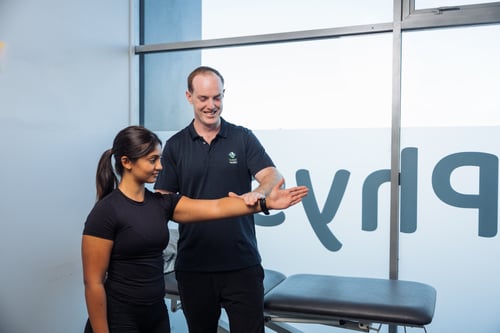
Depending on your injury, a physiotherapist can work with you to modify your dancing while you recover, with the goal of keeping you involved in classes and rehearsals where it is safe to do so. They can also help guide your return to full training and performance. Even one or two physiotherapy appointments can help you better understand your pain, what may be contributing to it and strategies you can use to manage it.
What are common dance injuries?
Dance injuries can occur suddenly, such as landing awkwardly from a jump, or develop over time through repetitive movements and training demands.
Some common injuries and conditions seen in dancers include:
- Ankle sprains
- Ankle impingement
- Achilles tendon injuries
- Other foot and ankle tendon issues
- Hip pain and injuries
- Knee pain
- Lower back pain
The right treatment will depend on the injury, your symptoms and the demands of your particular dance style.
A physiotherapist can assess your movement, strength and mobility to develop an individualised treatment and rehabilitation plan.
How can dancers prevent injuries?
Not every dance injury can be prevented, but there are steps you can take to help prepare your body for the demands of training and performance.
Manage your training and recovery
Your body needs time to recover between training sessions, rehearsals and performances.
Pay attention to your overall training load, particularly during busy periods when you may suddenly be dancing more frequently or at a higher intensity.
If you've had an extended break from dancing, gradually build back towards your previous level rather than immediately returning to the same number of hours and intensity.
Include cross-training
Dance develops a wide range of physical skills, but including other forms of exercise in your routine can help develop your overall strength and aerobic fitness.
Strength and conditioning exercises can complement your dance training and help prepare your body for the physical demands of classes and performances. Our sports and injury prevention team can help you build a programme that supports your dancing.
Fuel your body
Good nutrition is important for energy, recovery and overall health, particularly when you're training regularly.
Make sure you're giving your body the fuel it needs before and after dancing. If you're unsure about your nutritional needs, a dietitian can provide individual advice based on your training and goals.
Prioritise sleep and recovery
Sleep plays an important role in both physical and mental recovery.
During periods of increased training or performances, giving your body enough time to rest and recover is particularly important.
Consider the impact of stress
Training isn't the only demand being placed on your body. Emotional and psychological stress can also affect your recovery and how you experience pain.
During particularly stressful periods, you may benefit from adjusting your training and allowing additional time for rest and recovery.
How should you warm up before dancing?
A good dance warm-up helps prepare your body for the movements and physical demands ahead.
Rather than relying primarily on static stretches, such as holding the splits, your pre-dance warm-up should focus on dynamic movements that gradually prepare your muscles and joints for activity.
A dance warm-up could include movements that:
- Gradually increase your heart rate and body temperature
- Move your joints through the ranges you'll use while dancing
- Activate the muscles you'll use during your class or performance
- Challenge your balance and control
- Gradually progress towards dance-specific movements
Static stretching can still have a place in dance training, particularly when working on flexibility, but it doesn't need to be the main focus of your warm-up.
Your warm-up should also reflect the type of dancing you're about to do. Ballet, contemporary, jazz and hip-hop, for example, each place different demands on the body.
If an exercise causes pain, stop the exercise. If the pain persists or is affecting your ability to dance, seek advice from an appropriate healthcare professional.
When should a dancer see a physiotherapist?
You don't need to wait until an injury stops you from dancing before seeking help.
Consider seeing a physiotherapist if:
- Pain is affecting your dancing or everyday activities
- Pain keeps returning
- An injury isn't improving
- You've had to change the way you dance because of pain
- You're returning to dance after an injury
- You want guidance on strength, mobility or exercises specific to your dance goals
A physiotherapist can assess your movement, strength and mobility while considering the specific demands of your dance style.
From there, they can provide individualised exercises, rehabilitation and advice to support your recovery and help you return to dancing safely and confidently.
Interested in booking with Geneva? She's based in Auckland at Habit Health West Wave and ready to help - book online now. Or if you're elsewhere in New Zealand, our team has physios available nationwide, find a clinic near you.